Category Archives: semiquincentennial

5/15/2026 – Celebrating the 250th Anniversary of the founding of our Country

The Semiquicentennial, the 5th of the Series

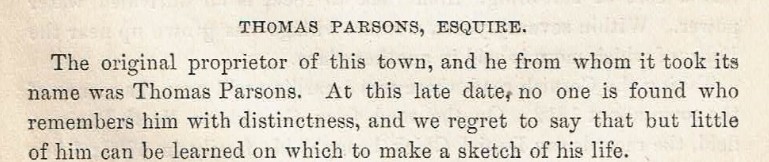
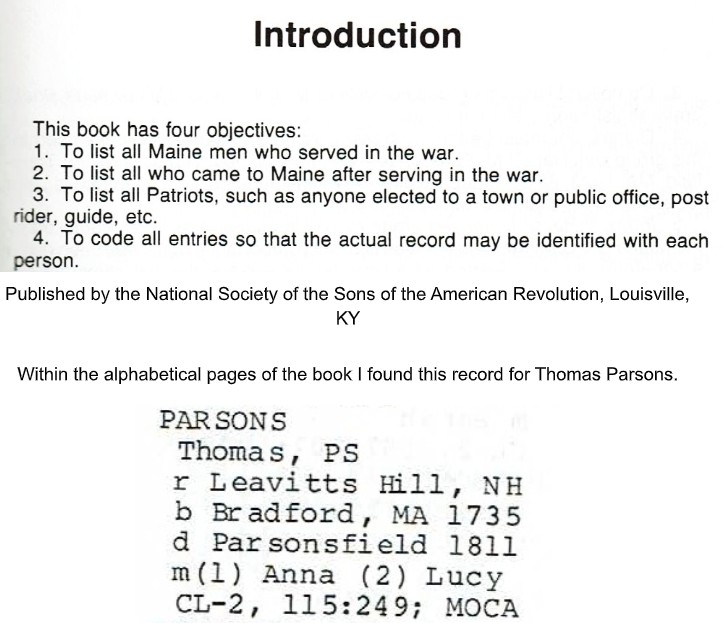
When I was told by our PPHS Vice-President, Lynda Sudlow, that she had read somewhere that Thomas Parsons had fought in the Revolutionary War, I thought that she must have been mistaken. The History of the First Century of Parsonsfield (1785 – 1885) by Jeremiah Dearborn tells us this about him:

Thomas Parsons was born in Bradford, Massachusetts on September 18, 1735, son of Rev. Joseph Parsons and Frances (Usher) Parsons. On September 7, 1758, when he was 22 years he married Anna Poor of Andover, Massachusetts.

They had 9 children together:

Thomas Parsons (1759–1788)
Stephen Parsons (1760–1764)
Joseph Parsons (1762–1839)
Enoch Parsons (1764–1782)
Stephen Parsons (1766–1836)
Nancy Parsons (1769–)
John Usher Parsons (1771–1825)
Mary Parsons (1773–1856)
Sarah Parsons (1775–

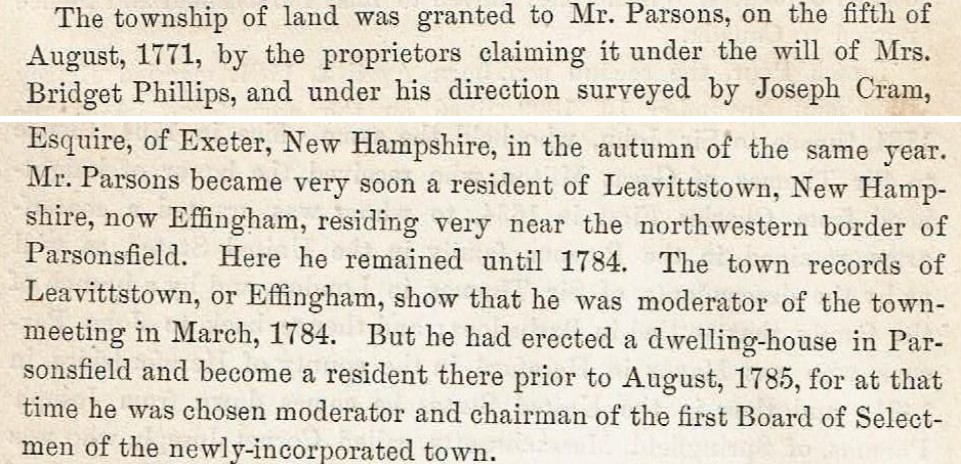
The founding of what came to be called Parsonsfield was set into motion when, according to the The History of the First Century of Parsonsfield, written in 1885,

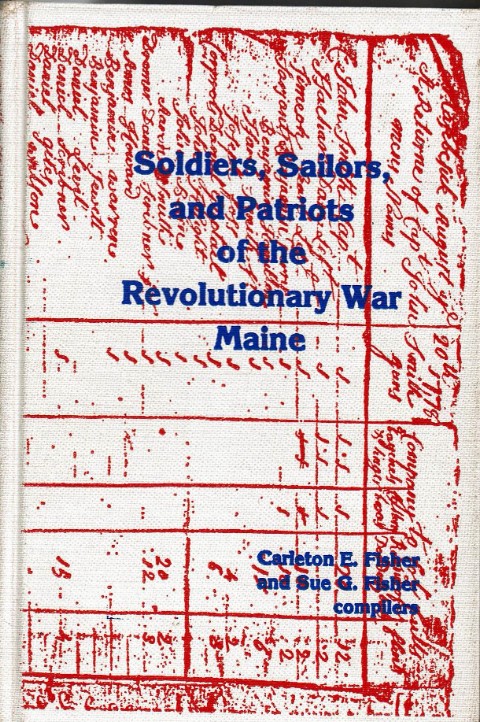
I’m sure that you can see why I was skeptical about Thomas’ participation in the Revolution.  He was 40 years old, married with 8 living children and was in \the midst of founding a town.  He was a very busy man.  But then I discovered this wonderful resource book which PPHS recently acquired when Ancient Landmarks disbanded and some of their books were added to our research materials.

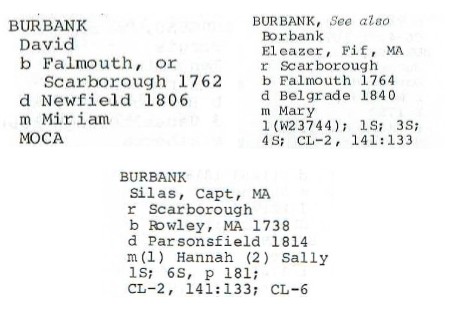
True to the book’s fourth objective as listed above, his entry gives the following source codes:
CL-2 is a Compiled List from the Index of Maine Men in the Rolls of Honor of the Lineage Books of National Society of the D.A.R., Vol 115, Page 249

MOCA is the Index of Revolutionary Veterans Buried in Maine compiled by the Maine Old Cemetery Association.

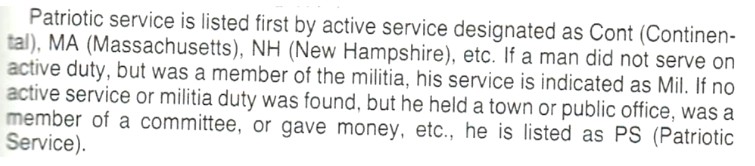
But what does PS after his name mean? The book defines it as Patriotic Service rendered in a different way as opposed to active service. Someone obviously needs to keep things going on the homefront.

During the American Revolutionary War, local militias played a crucial role, distinct from the longer-term service of the Continental Army. These units comprised citizen-soldiers who typically responded to immediate, localized threats, often referred to as “alarms.” Their service was usually brief, reflecting the need for community defense rather than extended military campaigns.

At the time of the Revolution, Thomas and family were living in Leavittstown, NH (now Effingham) and he was serving in the militia. Thomas’ service in the New Hampshire Militia in July 1777 exemplifies this pattern. He served for just 12 days, from July 1st to July 12th, a short duration characteristic of militia call-ups. His involvement was in response to an alarm concerning Fort Ticonderoga, a strategic point during the Saratoga Campaign. Such alarms prompted local residents to temporarily leave their farms and trades to join the fighting effort, demonstrating a community-based defense model. This brief period of service contrasts with the Continental Army, which required more sustained enlistments for national campaigns.

The British advance on Fort Ticonderoga in 1777 generated significant apprehension in the northern colonies, leading to calls for local militias to mobilize. Parsons’ record, detailing his entry and discharge dates, highlights how quickly these citizen-soldiers could be called to arms and released once the immediate threat subsided or their specific mission was completed. His participation, though brief, places him within the broader context of the Saratoga Campaign, a pivotal moment in the Revolution. The reliance on such short-term, alarm-based service underscores the decentralized nature of early American military efforts and the direct involvement of local communities in their own defense.

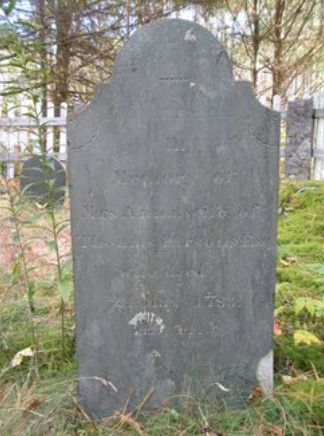
Whether or not, Thomas was again called up with the militia we have not determined. What we do know of the rest of his story is that his wife Anna died on May 24, 1783 at the age of 44. Then after serving as Moderator for the town meeting in Leavittstown, NH in March 1784, he moved to Parsonsfield where in August 1785 he was chosen Moderator and Chairman of the first Board of Selectmen of the newly-incorporated
town.

Also in 1785 Thomas married Lucy Bradbury (b. 1757) of Saco.

They had 10 children together:
Elizabeth Usher Parsons (1787–1857)
Susan Parsons  (1788–1837)
Thomas Bradbury Parsons ( – )
Abigail Parsons (1790–1848)
William Parsons (1791–1876)
Lucy Parsons (1792– 1884)
Lucinda Parsons (1795–1796)
Sylvester Parsons (1796–1860)
Lucinda Parsons (1798–1877)
Samuel B. Parsons (1801–1869)

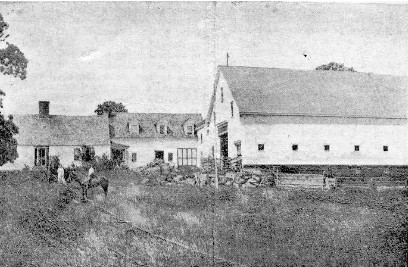
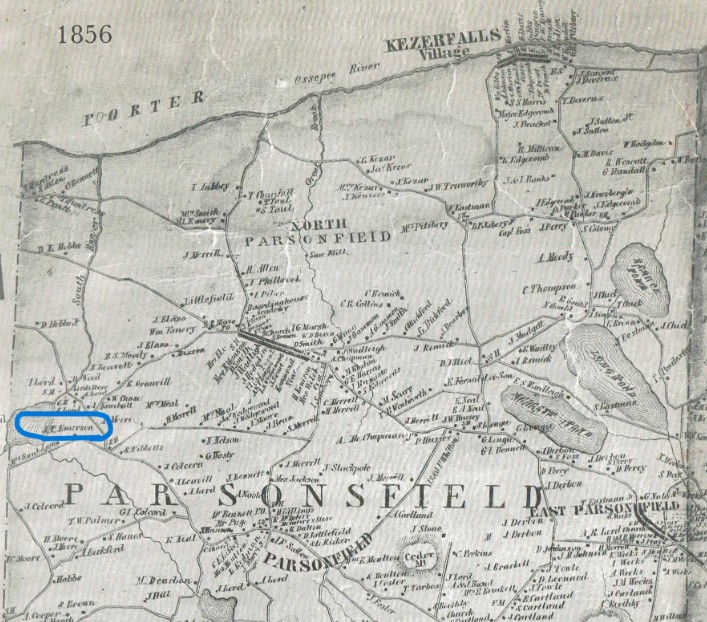
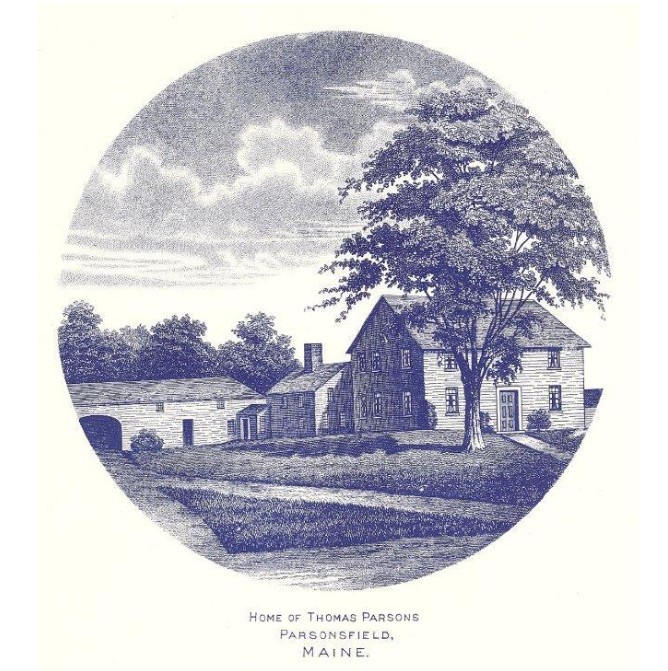
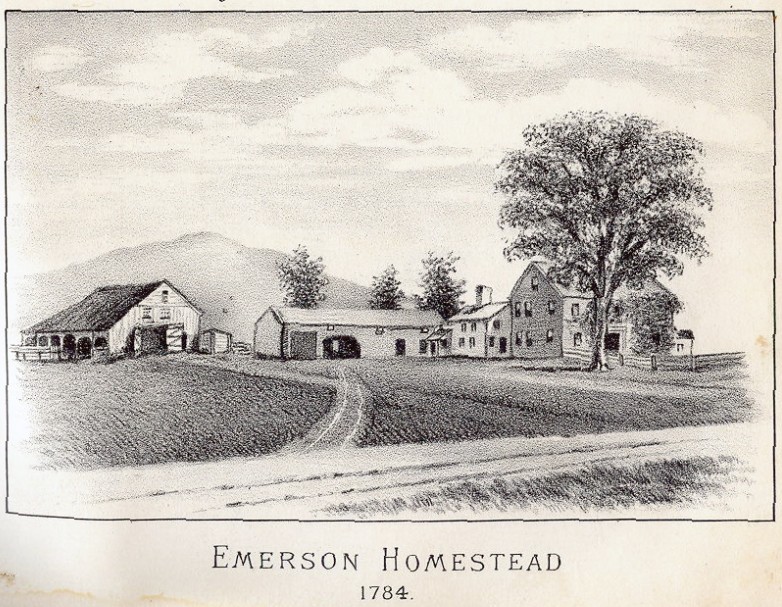
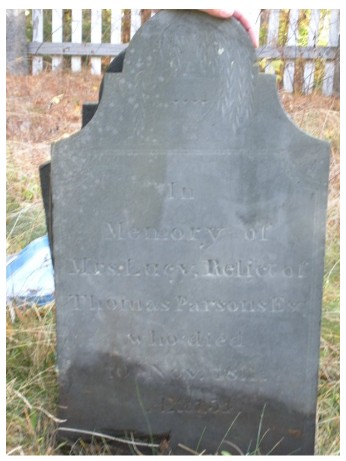
Thomas Parsons departed this life on August 10, 1811 and his wife Lucy succeeded him by only 3 months, dying November 10, 1811. Their homestead passed to their son-in-law, Capt. Luther Emerson (married to Thomas and Lucy’s daughter Elizabeth Usher Parsons) and became known as Emerson Homestead.

The house was owned by descendants of Thomas Parsons until 1907 when it was destroyed by fire.

Although the cellar hole was still there in 1960 there is no sign of the former buildings now.

It is completely overgrown with trees.

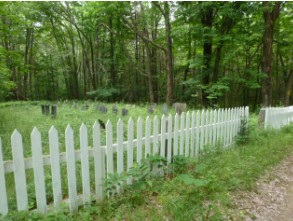
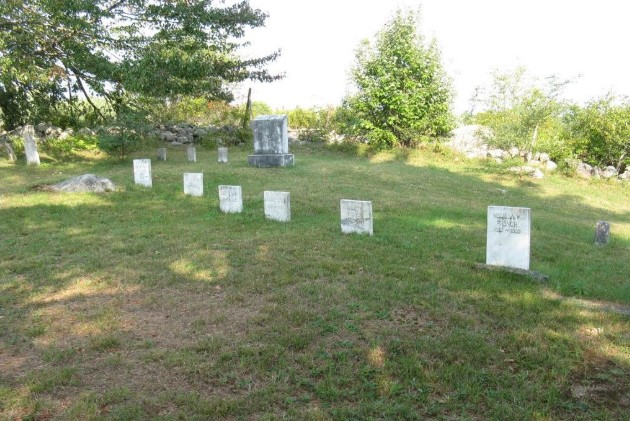
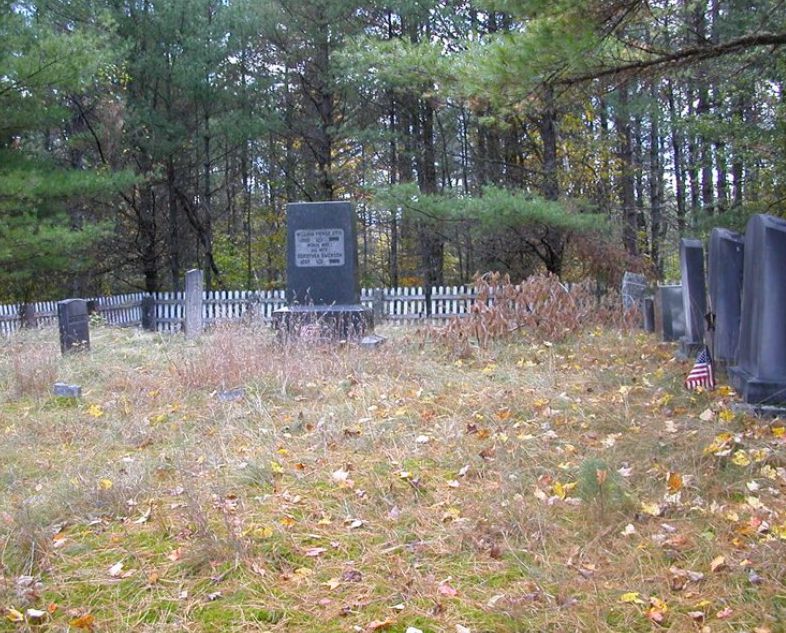
The Emerson-Parsons Cemetery remains in good condition on the opposite side of the road.

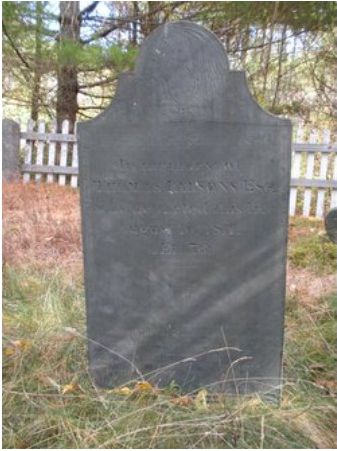
Thomas’ simple stone reads:

In memory of Thomas Parsons, who departed this life August 10, 1811, aged 76 years.

“Behold fond man, see here thy pictured life,

Thy flowery spring, thy summer’s ardent strength;
The sober autumn fading into age,
And pale concluding winter comes at last,

And shuts the scene.”

A Heartfelt Thank You to Thomas Parsons
for his Service in the Founding of Our Country
AND the Founding of the town of Parsonsfield

4/15/2026 – Celebrating the 250th Anniversary of the Founding of our Country, its Semiquincentennial – A correction and the 4th of the Series

Correction:

Before we tell the story of this month’s soldier we have a correction to last month’s story about John Trueworthy where we reported that:

“The 1790 Census shows his family still residing in Biddeford but they later took up residency in Phippsburg where in 1803 John served as constable and was required to collect taxes of several people in the town.“
Since that time PPHS President, Sylvia Trueworthy Pease, has discovered that our reading of the name of the town in the old document was in error and the name of the town was actually Phillipsburgh.

In the book Saco Valley Settlements and Famiies by Gideon T. Ridlon “The town was incorporated January 27, 1798 by the name of Phillipsburgh, in honor of the first white proprietor.”
“The name of the new town soon became a source of trouble, and a committee of seven wise men was appointed to find a more appropriate designation. Of the name Phillipsburgh it was said: ‘It is too long to write and too hard for the younger ones to pronounce.’ In 1811 the unwieldy name was exchanged for Hollis…The early government seems to have been rather arbitrary, as persons not used to authority are apt to be when in office.

Perhaps that is why John did not remain in Phillipsburgh because in February of 1807 he bought a parcel of land from Benjamin Rolfe in Parsonsfield. We are grateful that he did.

Now…the 4th in the Series

The featured soldier this month demonstrated remarkable dedication by serving for nearly the entire duration of the Revolutionary War.

Joseph Pearl (Jr) was born in January 1760 to Joseph and Sarah (Bickford) Pearl in Rochester, New Hampshire. The year 1776 brought great changes to his life. His older brother John, born 1753, died in June. Then his mother Sarah passed away on October 9, 1776, in Rochester, New Hampshire, at the age of 39.

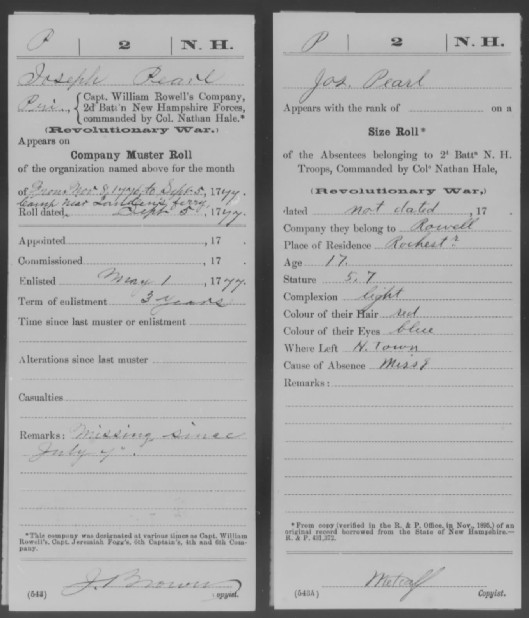
The following year, May 1977, he enlisted at Fort Independence in Captain Benjamin Titcomb’s Co. of the 2nd New Hampshire Regiment for a period of three years. He was only 17 years old.

The 2nd New Hampshire Regiment was organized May 1775 from Strafford and Rockingham counties and was commanded by Colonel Enoch Poor, of Exeter. In 1776 it was renamed the 8th Continental Regiment.

In a muster roll dated September 5th Joseph was listed as missing since July 7th and a description of the missing was given, a rarity in military records.

By mid-September Joseph was back with his company and thrust into battle at Saratoga, New York. Of the two battles of Saratoga, known as the Battles of Freeman’s Farm, Bemis Heights or Stillwater, the second battle was the first great victory of the Americans and was deemed by many historians to be the turning point of the Revolutionary War. The victory at Saratoga was significant not only for its immediate military impact but also for its diplomatic consequences. It convinced France to formally recognize American independence and enter the war as an ally, providing much-needed military and financial support.

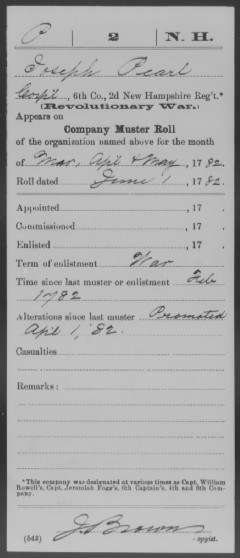
In 1781 Joseph served in Capt. Jeremiah Fogg’s company, 2 nd New Hampshire Regiment and in the following year was promoted from Private to Corporal on April 1, 1782.

After the end of the war, Joseph returned home and on November 17, 1783 married Catherine Clark (1762 – 1837) in his hometown, Rochester, New Hampshire, when he was 23 years old. They had ten children in 20 years. While still living in Rochester the following children were born: Mary (1784–1856); Simeon (1786–); Elizabeth (1786–); Benjamin (1790–1830); and Sarah (1792–1877); Perry Diamond (1794–1837); Anna (1796–1861); John (1798–1868); Joseph III (1801–1889); and James C. (1804–).

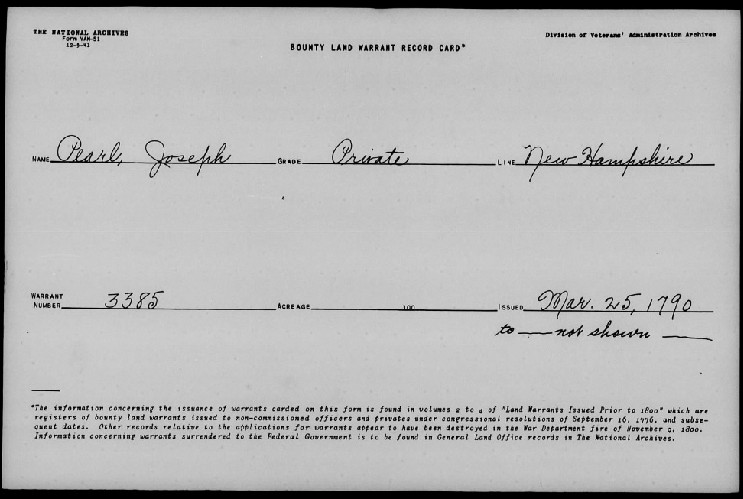
Joseph was apparently the recipient of bounty land according to this document.

Bounty land warrants were first authorized by the Continental Congress in September 1776 as a way to compensate soldiers for their service during the Revolutionary War, especially when the fledgling nation had limited financial resources. These warrants served both as a reward and as an incentive to encourage enlistment in the Continental Army. The amount of land granted varied by rank.

Whether or not the land granted to him was here in Porter, or if he sold the land granted for cash, he is listed in Thomas Moulton’s “History of Porter, As a Portion of Maine, Its Settlement, Etc.” written 1879 as being a settler in Porter in 1793.

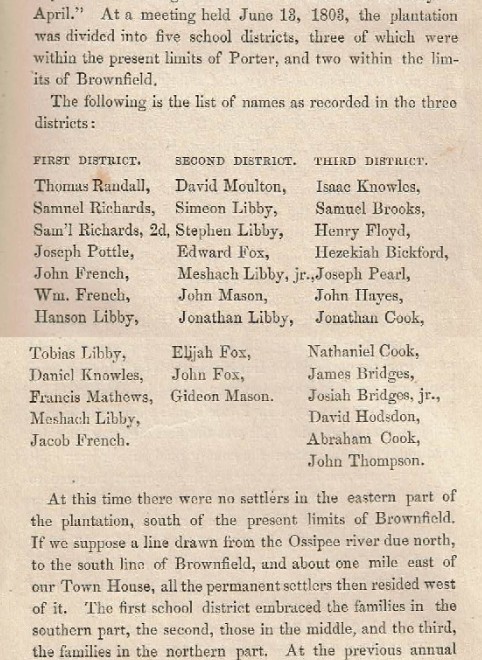
At a plantation meeting in June of 1803 when school districts were laid out, he was listed in School District Three which was described as being in the northern part of the settlement.

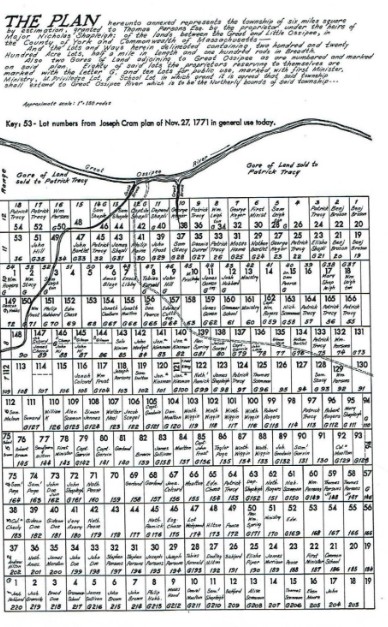
We have been unable to locate exactly where his property was, but in 1805 he sold part of the lot to Thomas Cutts of Saco. It is described as being part of lot 12, Range D on the proprietors map which would be in the northwest corner of Porter. The deed states that the conveyance includes the buildings thereon and is where he was currently living on land bought from Benjamin Bickford.

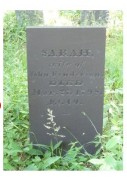
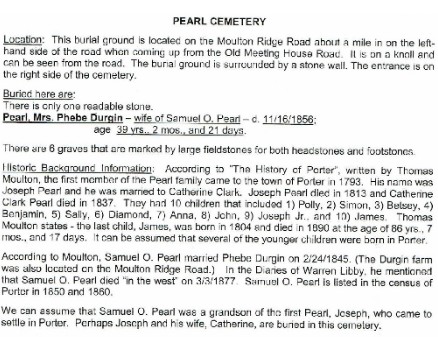
Joseph Pearl died in 1813 in Porter, Maine, when he was 53 years old. Maine Old Cemetery Association gives his burial place as Porter but sadly, beyond that, his final resting place is unknown. Neither is that of his wife, Catherine, who died in Porter in 1837. Our book, “Cemeteries of the Town of Porter, Maine” gives this as a possiblillty.

The service of individuals like Joseph Pearl Jr. in the American Revolutionary War exemplifies how ordinary citizens contributed to the struggle for independence.

Life as a soldier during the Revolution was arduous. Troops faced challenging conditions, including irregular pay, scarcity of provisions, and exposure to disease, which often claimed more lives than combat itself. Despite these hardships, the Continental Army and local militias, composed largely of citizen-soldiers, formed the backbone of the American resistance.

For individuals like Pearl, their service represented a profound personal
commitment to the founding of the new nation. Their experiences, shared by thousands, helped to forge a collective identity and laid the groundwork for the civic responsibility that characterized the early American republic.

A Heartfelt Thank You to Joseph Pearl
for his Service in the Founding of Our Country