The 10th in the Series
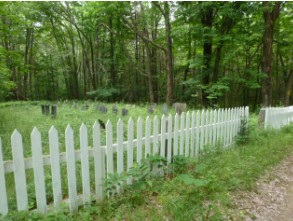
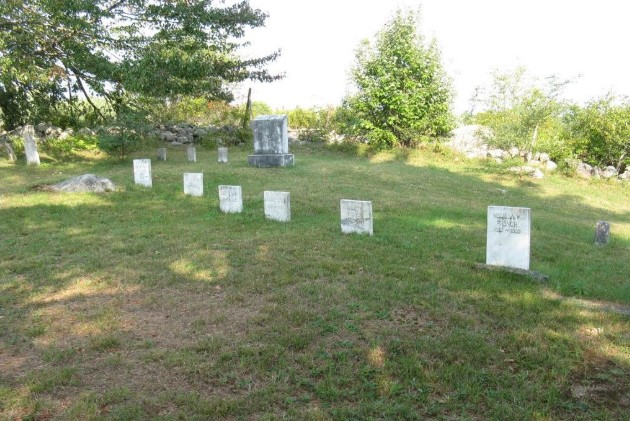
Samuel Pease Jr. is the fourth and final of the Revolutionary War soldiers buried in the Burbank – Goodwin – Morrison – Pease cemetery in South Parsonsfield.
Samuel was born on 10 March 1754 in New Market, Rockingham County, New
Hampshire, the son of Samuel and Dorothy (Clark) Pease.
I can only imagine what it must have been like in the early days after the Battles of Lexington and Concord took place on April 19, 1775. Especially for the young men in the Northeast.
On May 22, 1775, the New Hampshire Provincial Congress voted to raise a volunteer force of 2,000 men to join the patriot army at Boston. These “provincials” were organized into three regiments, each regiment having an official establishment of 648 officers and men in ten companies. The troops were enlisted to serve until December 31, 1775.
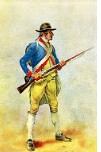
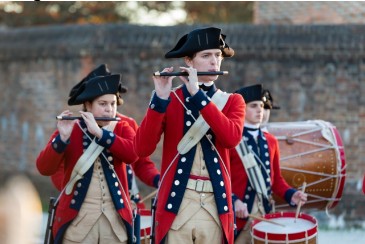
On the 10th of May, Samuel enlisted as a drummer or drum major in the
Continental Army for the term of eight months under Captain Aaron Kinsman under the command of Colonel John Stark of the New Hampshire Line.
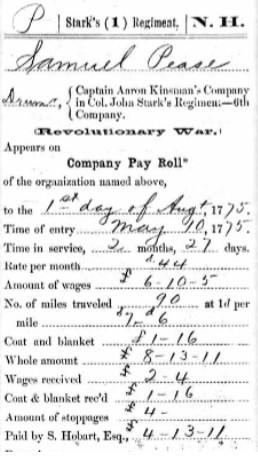
This term was followed by a second term of one year in the Company of Joshua Abbot of the same Regiment.
The New Hampshire Line was a formation in the Continental Army. The term “New Hampshire Line” referred to the quota of numbered infantry regiments assigned to New Hampshire at various times by the Continental Congress. These, along with similar contingents from the other twelve states, formed the Continental Line.
Colonel John Stark, of Derryfeld commanded the First New Hampshire
Regiment. In August 1775, Stark’s Regiment was designated “The 7th Regiment of Foot.” In 1776 The old 1st New Hampshire Regiment became the 5th Continental Regiment, under Colonel John Stark.
Records on file with the Sons of the American Revolution give us the following information as to Samuel Pease Jr’s service.
Qualifying Service Description:
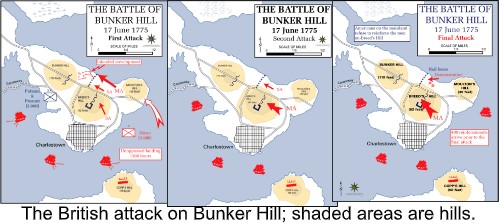
- Drummer – Captain Aaron Kinsman’s Company – Colonel John Stark’s 1st Regiment NH Continental Line, entered 10 May 1775, Battle of Bunker Hill
- Drummer – Captain Joshua Abbot’s Company – Colonel John Stark’s 1st
Regiment NH Continental Line / 5th Continental Regiment, service at Mount Independence, 1776
According to the History of Parsonsfield, in November 1779 Samuel’s father, Deacon Pease as he was called, moved his family to Parsonsfield. He was the eleventh of the original settlers of the town.
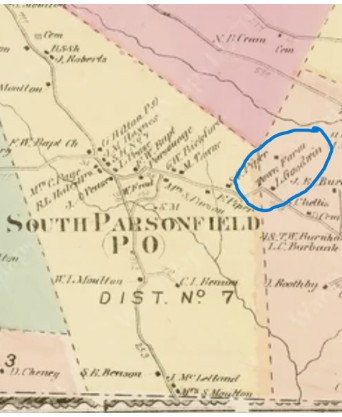
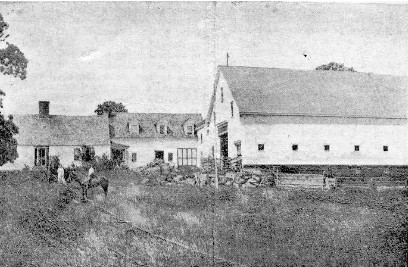
Also according to the Parsonsfield History, his son Samuel settled near his father in the orchard of the present town farm.
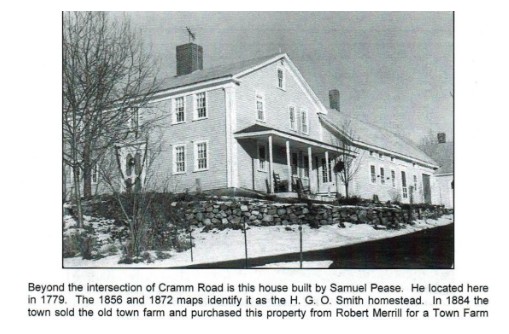
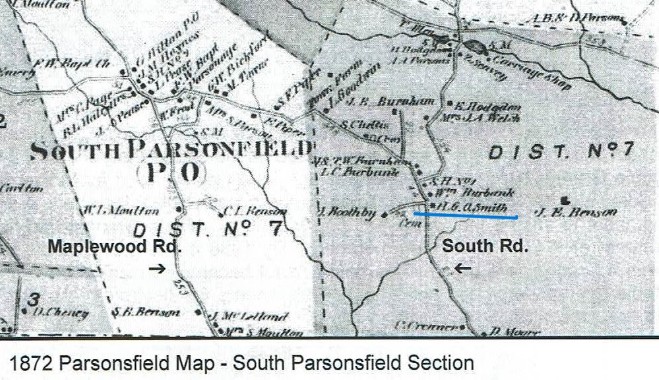
Samuel was married on 21 August 1780 in Parsonsfield, York County, Maine to Comfort Marston. The following children were recorded in the records at Parsonsfield:
- Comfort was born in August 1781.
- Nancy was born on 10 July 1784.
- John was born on 21 March 1786.
- Sarah “Sally” was born in June 1788.
- Asa was born in June 1791 and died in 1806.
- Philinea was born on 8 May 1794.
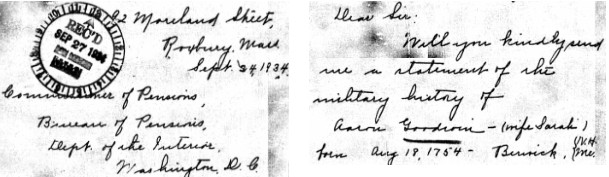
Samuel appears on the pension list, applying May 14, 1818 # S36726, at the rate of eight dollars per month
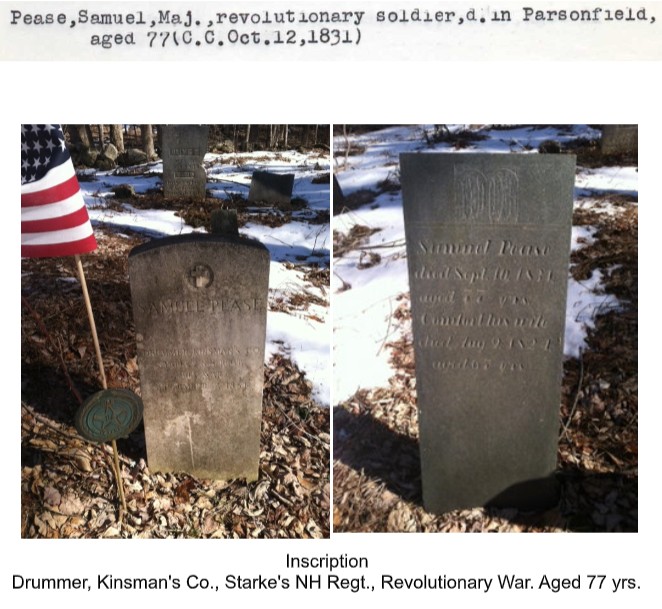
Samuel died on 7 September 1831 in Parsonsfield, York County, Maine.
His wife, Comfort, predeceased him in 1824. ‘
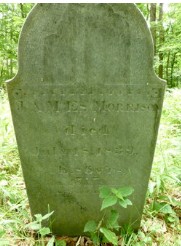
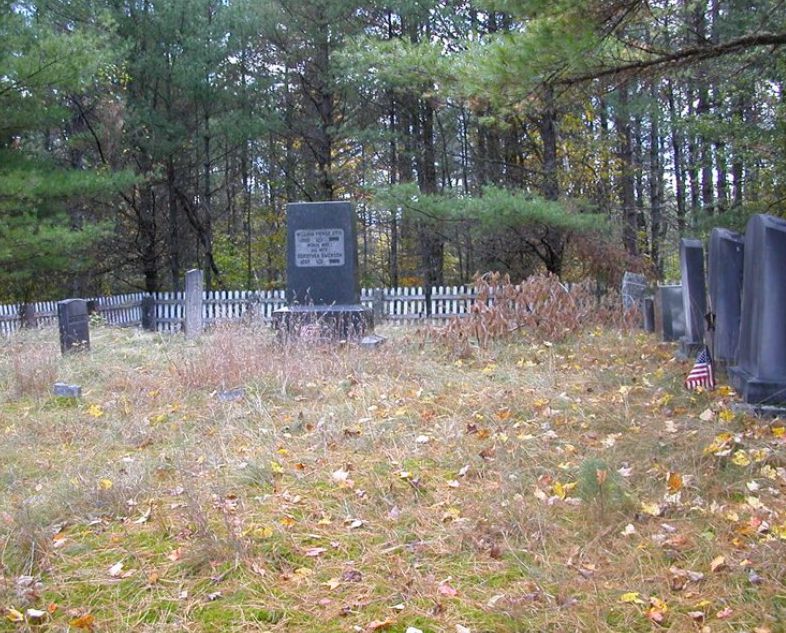
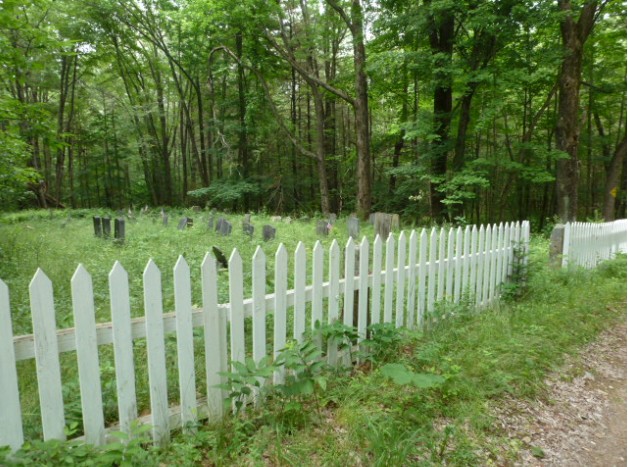
They are interred in the Burbank – Goodwin – Morrison – Pease Cemetery in South Parsonsfield.
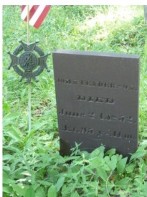
According to Find-A-Grave, there is some confusion about Samuel Pease’s dates and the fact that there seems to be 2 stones for him.
Even the U.S. Veteran Record gives the wrong year of death
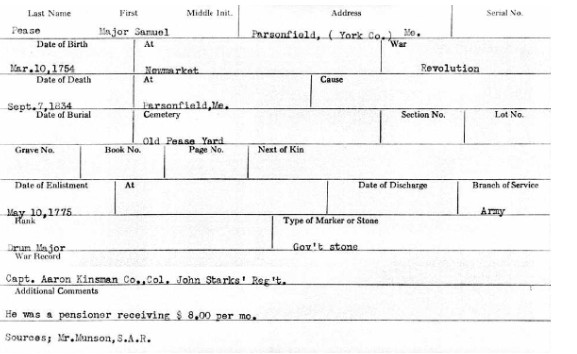
About 100 years after his death a memorial committee ordered a Revolutionary War memorial from the government with the wrong death date.
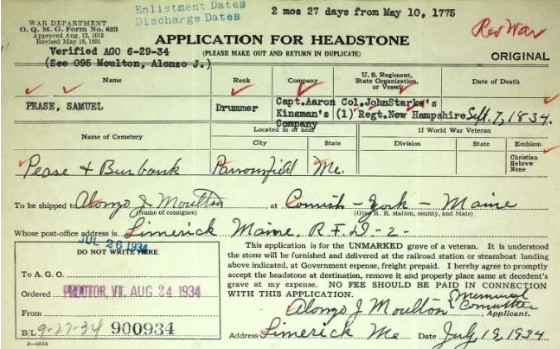
But this newspaper extraction from the Columbian Centinal published on October 12, 1831 clearly fixes his year of death as 1831.